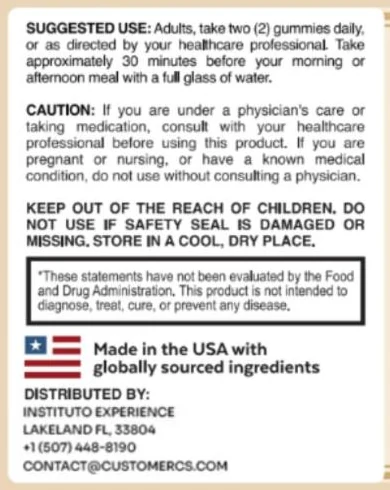
The label's own caution, word for word, followed by what the NIH Office of Dietary Supplements says about each nutrient, how Gelagen fits with medicines and other supplements, and who should check with a doctor first.

Editorial disclosure: gelagenguide.com is an independent guide and is not the manufacturer, distributor or seller of Gelagen. It contains affiliate links, and we may earn a commission if you purchase through them, at no extra cost to you. These statements have not been evaluated by the Food and Drug Administration. Gelagen is not intended to diagnose, treat, cure, or prevent any disease. Consult a healthcare professional before use.
The Gelagen label carries this caution, word for word: "If you are under a physician's care or taking medication, consult with your healthcare professional before using this product. If you are pregnant or nursing, or have a known medical condition, do not use without consulting a physician." It adds: "Keep out of the reach of children. Do not use if safety seal is damaged or missing. Store in a cool, dry place."
The label lists no side effects of its own. The notes below come from the NIH Office of Dietary Supplements (ODS) fact sheet on each nutrient. They describe the nutrient by itself; none of them tested Gelagen.
ODS explains that very high biotin intakes can change the results of some laboratory tests that use biotin-streptavidin technology, such as thyroid tests, and describes a case where a 10 mg dose affected thyroid tests taken within 24 hours. The simple step: tell your doctor you take Gelagen before any blood work. ODS also notes that no upper limit has been set for biotin.
NIH ODS: BiotinRetinyl acetate is preformed vitamin A, which counts toward the adult upper limit of 3,000 mcg a day. ODS says people who are or might be pregnant should not take high-dose preformed vitamin A supplements, and notes that some prescription medicines are made from vitamin A, so taking them together with a vitamin A supplement can raise vitamin A levels too far. One serving is well under the limit, but check with a doctor first if either applies to you.
NIH ODS: Vitamin AThe amount is under half the Daily Value and far below the 1,000 mg adult upper limit ODS gives for supplements. ODS notes that vitamin E supplements can add to the effect of blood-thinning medicines, so anyone taking one should check with a doctor first.
NIH ODS: Vitamin EA quarter of the Daily Value and well below the 40 mg upper limit. ODS notes that zinc supplements can interact with some antibiotics and other medicines, so a pharmacist can tell you how far apart to take them.
NIH ODS: ZincUnder a third of the Daily Value and far below the 1,100 mcg upper limit. ODS notes that high doses of iodine can add to the effect of antithyroid medicines; the amount here is small, but anyone taking such a medicine should check with a doctor first.
NIH ODS: IodineAll sit below the adult upper limits ODS gives where one exists: 100 mg for B6 (2 mg here), 1,000 mcg of folic acid (260 mcg here), 2,000 mg for vitamin C (20 mg here) and 100 mcg for vitamin D (10 mcg here). ODS sets no upper limit for B12 or pantothenic acid.
NIH ODS: Vitamin B6The NIH Office of Dietary Supplements gives three general points that apply to any supplement: tell your health care providers about every dietary supplement you take, keep in mind that "natural" does not always mean safe, and remember that supplements can interact with some medicines. For Gelagen, the main thing to watch is overlap: a multivitamin or a hair, skin and nail product may add more of the same nutrients.
Bring the label to your doctor or pharmacist, especially if you take a thyroid medicine, an antibiotic, a blood-thinning medicine or a vitamin A-based medicine. Check with a doctor first.
Add up the biotin, vitamin A, folic acid and zinc across your products. Many multivitamins and beauty supplements contain the same nutrients, and a pharmacist can compare the labels in a minute.
The label asks you to consult a physician before use, and ODS has specific advice on preformed vitamin A and folic acid in pregnancy. Check with a doctor first.
The label's serving is two gummies a day. Gummies taste like candy, so keep the bottle out of reach of children.
The label lists none of its own. Every amount on the panel is below the adult upper limits the NIH Office of Dietary Supplements gives, where one exists. The point most people miss is the biotin: tell your doctor you take it before any blood test.
It can. The NIH Office of Dietary Supplements says very high biotin intakes can change the results of some laboratory tests, such as thyroid tests. Tell your doctor or the lab that you take Gelagen before blood work.
Talk with your doctor or pharmacist first, especially if you take a thyroid medicine, an antibiotic, a blood-thinning medicine or a medicine derived from vitamin A, the groups the ODS fact sheets mention for iodine, zinc, vitamin E and vitamin A.
Possibly, but add up the amounts first: biotin, vitamin A, folic acid and zinc appear in many multivitamins and beauty supplements. A pharmacist can compare the labels.
The label asks pregnant or nursing women to consult a physician before use. The NIH Office of Dietary Supplements has specific advice on preformed vitamin A and folic acid in pregnancy, so check with a doctor first.
The directions are written for adults, and the label says to keep the bottle out of reach of children.
No. Each serving of two gummies has 3 g of added sugar and 10 calories.
Stop taking it and talk to your doctor if anything worries you. For a refund, the official website states a 60-day money-back guarantee; the buying guide explains how to ask.
Gelagen comes in packs of 2, 3 or 6 bottles of 60 gummies. The 3- and 6-bottle packs ship free, and the order page states a 60-day money-back guarantee. Step-by-step help is in the Gelagen buying guide.
Go to the Gelagen Order PageThis site uses Google Analytics cookies to count visits. See the privacy policy.