Every gummy is held together by a gelling agent, usually pectin or gelatin. Where each one comes from, how each one sets, where you meet them, and how to tell from a label which one a gummy uses.

Editorial disclosure: gelagenguide.com is an independent guide and is not the manufacturer, distributor or seller of Gelagen. It contains affiliate links, and we may earn a commission if you purchase through them, at no extra cost to you. These statements have not been evaluated by the Food and Drug Administration. Gelagen is not intended to diagnose, treat, cure, or prevent any disease. Consult a healthcare professional before use.
A gummy holds its shape because of a gelling agent. The two most common ones come from opposite ends of the kitchen: pectin from fruit, gelatin from animal collagen. The other ingredients line of a label says which one a gummy uses.
A family of polysaccharides found in the primary cell walls of plants, made up mainly of galacturonic acid. Commercial pectin is prepared from apple pomace and citrus peel by acid extraction; pectin makes up about 10 to 15% of the dry matter of apple pomace and 20 to 30% of citrus peel.
Gawkowska et al., Polymers, 2018Gelatin is obtained by partial hydrolysis of collagen, the main constituent of connective tissue, bones, tendons and skin. Pig skin accounts for about 46% of world gelatin production, bovine hides for 29.4% and bovine bones for 23.1%, leaving a small share for other sources such as fish.
Al-Nimry et al., Marine Drugs, 2021Pectin with more than half of its carboxyl groups esterified sets at a pH below 3.5 and a sugar concentration above 55%.
Pectin with 5 to 50% of its carboxyl groups esterified sets with calcium or other divalent ions, across a pH range of 2 to 6, and needs no sugar to gel.
Gelatin gels are thermo-reversible: they turn liquid when heated and set again when cooled.
Pectin review: gelling conditions Gelatin review: thermo-reversible gels
Jellies, jams, marmalades, fruit juice and confectionery products, according to the pectin review.
Dairy and bakery products, desserts such as gummy candies and marshmallows, and the manufacture of capsules, according to the gelatin review.
For anyone who avoids animal products, the difference matters: pectin comes from fruit, gelatin from animal collagen. A gummy can still contain other ingredients of animal origin, so the full label, or a question to the maker, settles it.
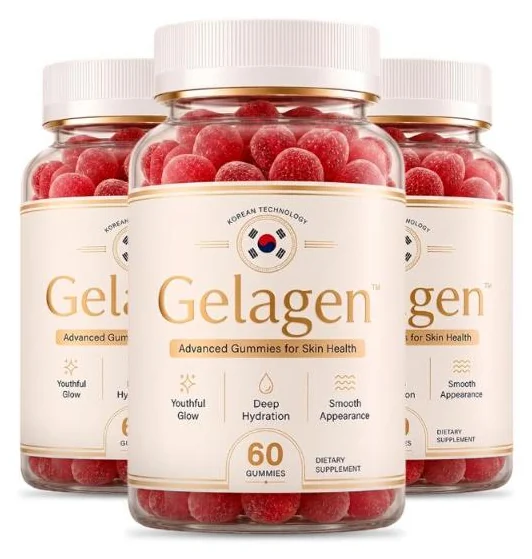
The name sounds like gelatin, and many readers arrive here after ads for the "gelatin trick". The Gelagen label lists its other ingredients as corn syrup, water, pure cane sugar, pectin, citric acid, natural flavor, sodium citrate, tapioca starch and beet root extract (color). Pectin is the gelling agent; neither gelatin nor collagen appears on the label. This page describes the gummy materials only and makes no comparison of their effects.
The vitamins and minerals in each serving are listed on the Gelagen ingredients page.
The gelling agent. Pectin comes from plant cell walls, mainly apple pomace and citrus peel; gelatin is made by partial hydrolysis of animal collagen, mostly from pig skin and bovine hides and bones.
They are different materials rather than better or worse ones. Pectin is plant-derived and gelatin comes from animal collagen, so the choice usually comes down to diet. The label shows which one a gummy uses.
Pectin itself comes from fruit, but a gummy can contain other ingredients of animal origin. Check the full label, or ask the maker if the label does not say.
Collagen. Pig skin accounts for about 46% of world production, bovine hides for 29.4% and bovine bones for 23.1%; some gelatin is made from fish.
Gelatin gels are thermo-reversible: they turn liquid when heated and set again when cooled.
No. The Gelagen label lists pectin as the gelling agent, with no gelatin and no collagen.
High-methoxyl pectin sets with sugar above 55% and a pH below 3.5; low-methoxyl pectin sets with calcium and needs no sugar.
Gelagen comes in packs of 2, 3 or 6 bottles of 60 gummies. The 3- and 6-bottle packs ship free, and the order page states a 60-day money-back guarantee. Step-by-step help is in the Gelagen buying guide.
Go to the Gelagen Order PageThis site uses Google Analytics cookies to count visits. See the privacy policy.